How is electricity generated and how does it reach our homes
Have you ever wondered how the electricity that lights up our homes, charges our mobile phones, and powers machines across the globe is actually generated?
We flip a switch every day, and the lights come on instantly. However, the story behind this is fascinating and somewhat complex. Electricity has become an essential part of our lives today; if the power goes out for even a single day, we realize just how dependent we are on it. Just imagine—how could massive cities, factories, trains, and hospitals function without electricity? Generating, storing, and distributing electricity to every home involves a vast system. Where is electricity generated? How is it produced? And how does it travel such a long distance to reach our homes? In this article, we will explain the entire process—from generation to delivery—in simple language.
Understand the electricity generation process in three stages
To simplify the process of electricity generation and delivery, we can break it down into three stages:
How is electricity generated?
How is electricity transmitted over long distances?
How does electricity reach our homes?
Let’s start by understanding how electricity is generated.
How is electricity generated
The fundamental principle of generating electricity is converting one form of energy into another. In other words, electricity isn’t usually created directly; instead, other forms of energy are transformed into electrical energy. For instance, various power plants generate electricity using energy sources like coal, water, wind, and sunlight.
How is electricity generated from coal
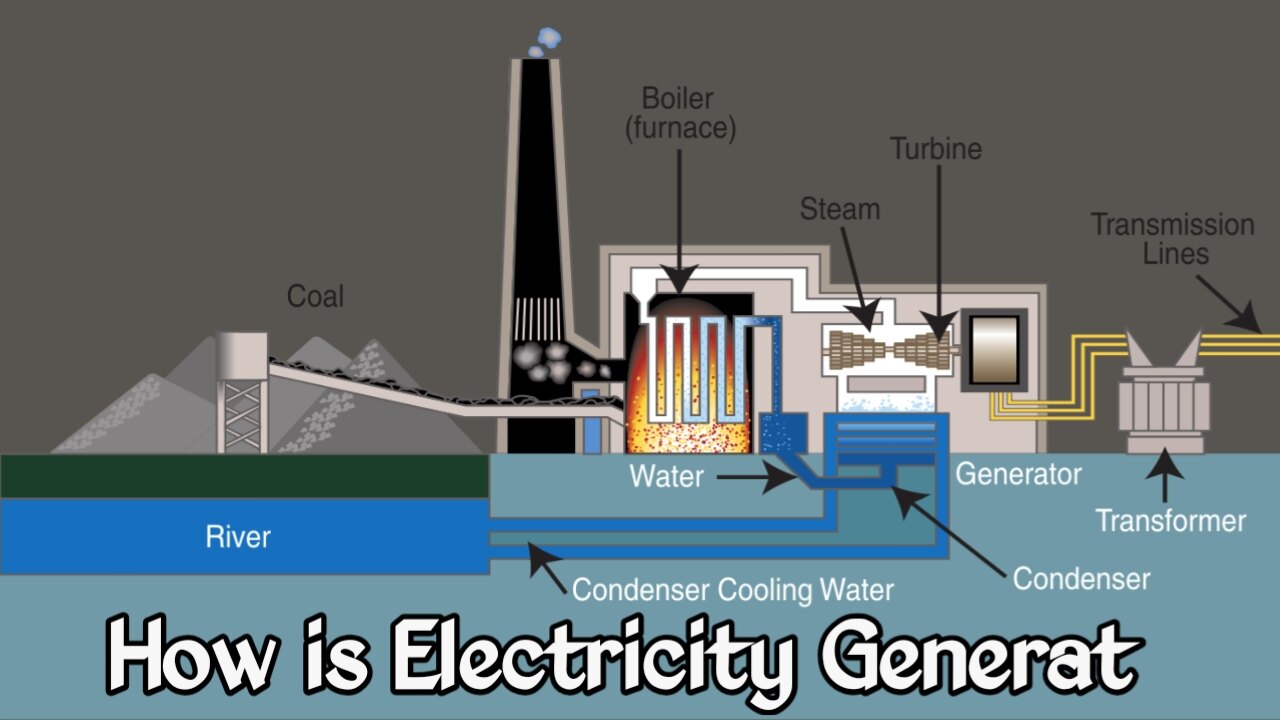
First, coal is transported to the power plant. Next, the coal is burned in a large boiler. Burning coal generates immense heat. This heat is used to warm the water inside the boiler, turning it into steam. This steam is at very high pressure and temperature. It is directed toward a large machine called a turbine. When the high-speed steam strikes the turbine blades, the turbine begins to spin rapidly. This is where the real work begins. The turbine is connected to a generator; as the turbine spins, the generator spins as well, and this process generates electricity.
How does a generator produce electricity
Let’s understand this in simple terms. Imagine a massive magnet spinning rapidly, surrounded by copper coils. As the magnet spins, the magnetic field around it changes. This change induces an electric current in the coils—a process known as electromagnetic induction. Simply put, relative motion between a magnetic field and a wire can generate electrical energy. In other words, electricity isn’t magic; it is the result of converting energy from one form to another.
You can visualize the entire process like this:
Coal → Heat → Steam → Turbine → Generator → Electricity
How is electricity generated from water
Hydropower is another method of generating electricity. Hydropower plants harness the energy of flowing water or water falling from a height. When water spins the turbine at high speed, the turbine drives the generator, which produces electricity. Unlike the coal-based method, there is no need to generate steam here; the water itself drives the turbine. However, a crucial factor is that hydropower relies on water availability. If water levels in the dam or reservoir drop, electricity generation can be affected. Consequently, rainfall and water availability directly impact hydropower production.
How is electricity generated from wind
Wind energy is also used to generate electricity. You have likely seen large, fan-like structures known as wind turbines. When the wind blows, the turbine blades begin to rotate. This turbine is connected to a generator. As the turbine spins, it drives the generator, producing electricity. In essence, wind energy is converted into electrical energy here.
How is electricity generated from sunlight
With solar energy, sunlight is converted directly into electricity. Solar panels are used for this purpose; the solar cells within these panels transform sunlight into electrical energy. This method differs slightly from others because it does not require turbines or generators. Thus, electricity can be generated from various energy sources.
However, once electricity is generated, another major challenge arises: transporting it over long distances.
How is electricity transported over long distances
Power plants are often located quite far from cities and homes. Therefore, a vast transmission system is required to transport electricity over long distances. This marks the beginning of the second phase of the electricity’s journey, known as transmission. After electricity is generated at the power plant, its voltage is increased using a transformer. Transformers can either step up (increase) or step down (decrease) the voltage. To transmit electricity over long distances, the voltage is significantly increased. The high-voltage electricity is then transmitted over long distances via large towers and high-voltage transmission lines.
Why is the voltage of electricity increased
Now, the question arises: why is the voltage of electricity raised to such high levels
When transmitting electricity over long distances, some energy is lost as heat due to the resistance of the wires. Transmitting electricity at high voltage allows the current to be kept lower for the same amount of power, thereby reducing transmission losses. This is why the voltage is stepped up before electricity is sent over long distances.
What happens after it reaches the city
When high-voltage electricity reaches a city or the surrounding area, its voltage is stepped down again, as such high-voltage electricity cannot be supplied directly to homes. After this, the electricity enters the distribution system.
How does electricity reach our homes
Now begins the third stage—distribution. Transformers are installed at various locations in cities and villages; you have likely seen them along the roadside. These transformers help step down the voltage to a level suitable for use in homes and by other consumers. Subsequently, the electricity reaches your home via distribution lines. In India, the standard domestic supply is approximately 230 volts. You flip a switch in your home, and the light turns on; however, behind that single switch, a vast network comprising generation, transmission, and distribution is at work.
Why is it difficult to store electricity on a large scale
Another interesting fact is that storing electricity on a large scale is not easy. Therefore, maintaining a balance between generation and consumption within the power system is essential.
This means that when the demand for electricity rises, generation and system capacity must be adjusted to meet that demand. If there is a sudden surge in demand, the power system must manage generation and supply accordingly; conversely, when demand drops, generation is adjusted downwards. For this reason, the entire electrical system operates on a continuous balancing act.
Why do power outages occur
Now, an important question arises: why does the power sometimes go out? There can be several reasons for this, such as high demand, adverse weather, technical faults, or issues with transmission or distribution lines. Sometimes, power supply may need to be restricted to safeguard the system and protect the entire grid from a major failure.
Coal-based Power and Green Energy
Generating electricity from coal impacts the environment. Consequently, the world is rapidly shifting its focus toward energy sources like solar, wind, and hydro power. India, too, is seeing increased adoption of solar power and other renewable energy sources; electricity is being generated using solar panels in many locations.
The Journey from Generation to Your Home
Let’s break down the entire process in simple terms. It begins with an energy source—such as coal, water, wind, or sunlight. In coal-based generation, heat is produced first to create steam from water. This steam spins a turbine, which in turn drives a generator, producing electricity. In hydropower, water directly spins the turbine. Wind power uses wind to spin the turbine, whereas solar power converts sunlight directly into electricity.
Next, the voltage is stepped up so the electricity can be transmitted over long distances via transmission lines. Upon reaching the vicinity of cities and villages, transformers step down the voltage, and the electricity finally reaches our homes through the distribution system.
Conclusion
Electricity is not magic; it is the result of a comprehensive process that converts various energy sources into usable electrical energy. When we flip a switch at home and the light turns on, a vast system—spanning power plants, transmission lines, transformers, and distribution networks—is working behind the scenes. Therefore, using energy responsibly is crucial. Simple actions like turning off unnecessary lights and appliances and conserving energy may seem small, but they can have a significant impact. So, the next time you flip a switch at home, do take a moment to consider that it is not just a button; behind it lies a massive system and the hard work of millions of people.

I am the founder and content creator of SuperJankari.com, a technology-focused website dedicated to sharing useful information about smartphones, laptops, gadgets, apps, software, and the latest technology updates. My goal is to make technology easy to understand by providing clear, practical, and informative content for readers.